Want to be in the loop?
subscribe to
our notification
Business News
GOVERNMENT APPROVES PLAN TO ADOPT 4G
Four years ago the Ministry of Information and Communications licensed five operators FPT Telecom, VNPT, Viettel, CMC, and VTC to pilot 4G services.
The country's major telecom service providers are ready to launch 4G services.
The three biggies, Viettel, MobiFone, and Vinaphone, have successfully tested their 4G services in some big cities and can scale up in a jiffy. But though they have been investing in large 4G networks since late last year, they continue to have misgivings.
"Mobile phone service providers are still investing in digital content for 3G," Do Vu Anh, head of the Vietnam Post and Telecommunication Corporation's telecommunications department, told Saigon Giai Phong (Liberated Saigon) newspaper, indicating they are still focused argely on 3G services.
Viettel successfully pilot 4G technology in Laos and Cambodia through its Unitel and MetFone networks, but is undecided about whether to scale up.
A Viettel executive said, "Vietnamese people's incomes are not enough for them to buy equipment that support 4G." Besides, investment in 3G was massive but its capacity had not been fully exploited yet, he said.
"Most customers now opt for the cheapest 3G packages, and if 4G technology is developed, the situation will be like building more highways when there are few vehicles."
The service providers could upgrade to 3.5G or 3.9G and still meet the demands of mobile data services rather than moving up straight to 4G, he said.
Do Vu Anh said, "Vietnam's 3G services are probably the cheapest in the world, but there are only 30 million subscribers or 30% of the total number of mobile phone subscribers.
"The potential of 3G in Vietnam is [still] huge."
Deputy Minister of Information and Communications Le Nam Thang said the ministry would begin to issue licences for 4G networks next year.
"At first, 4G will be launched in big cities like Hanoi, HCM City, and Danang where people have big demand and are able to pay."
Thieu Phuong Nam, general director of Qualcomm Vietnam, agreed it was a good time to issue licences because 4G-related equipment would become cheaper and cheaper.
"2017-2018 will be the time to launch 4G because at that time the number of 3G subscribers will be 50%-60%, a good level for shifting to 4G.
"Government has made good long-term and master plans for bandwidth usage."
There are around 500 million 4G subscribers around the world. The technology is developing rapidly and most 4G subscribers can use both 3G and 4G services.
4G services are much cheaper than 3G and 2G.
The switch from 2G to 3G involved moving up from basic mobile phone services like calling and messaging to broadband with digital content.
Source: VIR
Related News
VIETNAM ECONOMY INVESTMENT
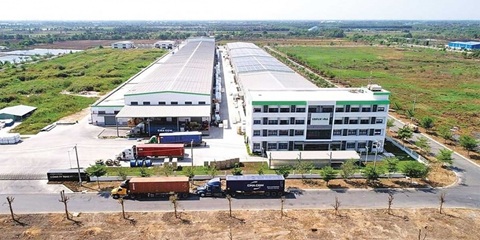
FOREIGN INVESTORS SEEKING A SYNCHRONISED MANUFACTURING ECOSYSTEM
Instead of focusing only on land costs and incentives as usual, foreign investors are seeking a synchronised manufacturing ecosystem, from stable power supply and logistics to shared infrastructure and the convenience of completing residence procedures for experts to serve their long-term investment in the country.
INFRASTRUCTURE / CONSTRUCTION / LOGISTIC / PORT
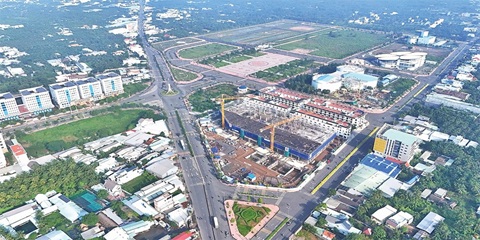
DONG THAP PROVINCE STEPS UP INDUSTRIAL EXPANSION AND INFRASTRUCTURE CONNECTIVITY
Accelerating public investment, strengthening inter-regional connectivity, and expanding industrial land are helping Dong Thap efficiently bolster competitiveness and drive economic growth. Following the 2025 merger of the former Dong Thap and Tien Giang provinces, the expanded Dong Thap province in the Mekong Delta faces mounting pressure to accelerate infrastructure development and strengthen connectivity among local economic zones, urban areas, industrial parks (IPs), and production centres.
PROPERTY / INDUSTRIAL ZONE
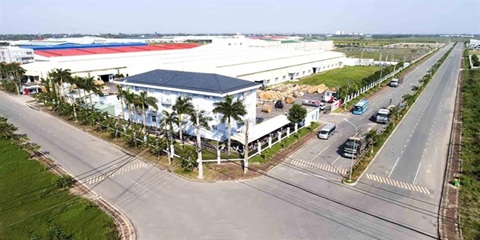
HCM CITY ATTRACTS US$5.7 BILLION INTO EXPORT PROCESSING AND INDUSTRIAL ZONES
HCM City attracted US$5.7 billion in domestic and foreign investment into its export processing and industrial zones during the first nine months of 2026. The figure exceeded the city's full-year target by 31 per cent, highlighting strong momentum in high-quality industrial investment under Resolution No.10-NQ/TW. Total investment reached 131 per cent of the 2026 target of $4.25 billion and represented a 29 per cent increase compared with the same period in 2025, according to the city's Export Processing and Industrial Zones Authority (HEPZA).

BANKING / FINANCE / INSURANCE / TAX
REMITTANCES TO HCM CITY RISE NEARLY 40% IN Q3
Remittances to HCM City reached more than US$2.83 billion in the third quarter of this year, up 39.5 per cent from the previous quarter and 3.6 per cent year-on-year. This was the first quarter showing positive annual growth this year, helping narrow the decline in remittance inflows over the first nine months. According to the State Bank of Vietnam (SBV)’s Regional Branch 2, remittances transferred to HCM City through credit institutions and economic organisations totalled $2.835 billion in Q3, an increase of more than $802 million from the previous quarter.

VIETNAM ECONOMY INVESTMENT
LOCALITIES REPORT BREAKTHROUGH RESULTS IN FDI IN FIRST NINE MONTHS
In Ho Chi Minh City, total registered capital reached $17.2 billion in the first nine months, up 4.2 times from the same period last year. The figure included more than $9.35 billion in newly registered capital and over $4.9 billion in additional capital for existing projects. Foreign investors also registered more than $2.9 billion through capital contributions and share purchases.
TECHNOLOGY
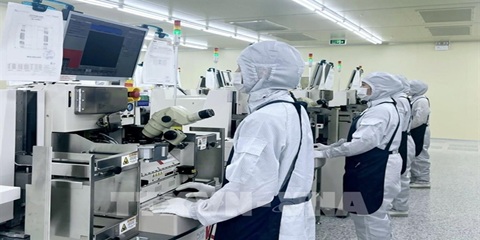
TECH SECTOR GROWTH OPENS UP OPPORTUNITIES FOR VIỆT NAM TO GO GLOBAL
The growth of the electronics, semiconductor and high-tech sectors worldwide is opening up a variety of opportunities for Vietnamese enterprises to integrate more deeply into the global supply chain. However, to become suppliers for these corporations, domestic enterprises must meet rigorous standards regarding quality, technology, productivity and order fulfilment capabilities.
Events Sponsors






















